

Full-service technical production: what it really means ?
live events, immersive experiences and entertainment technology

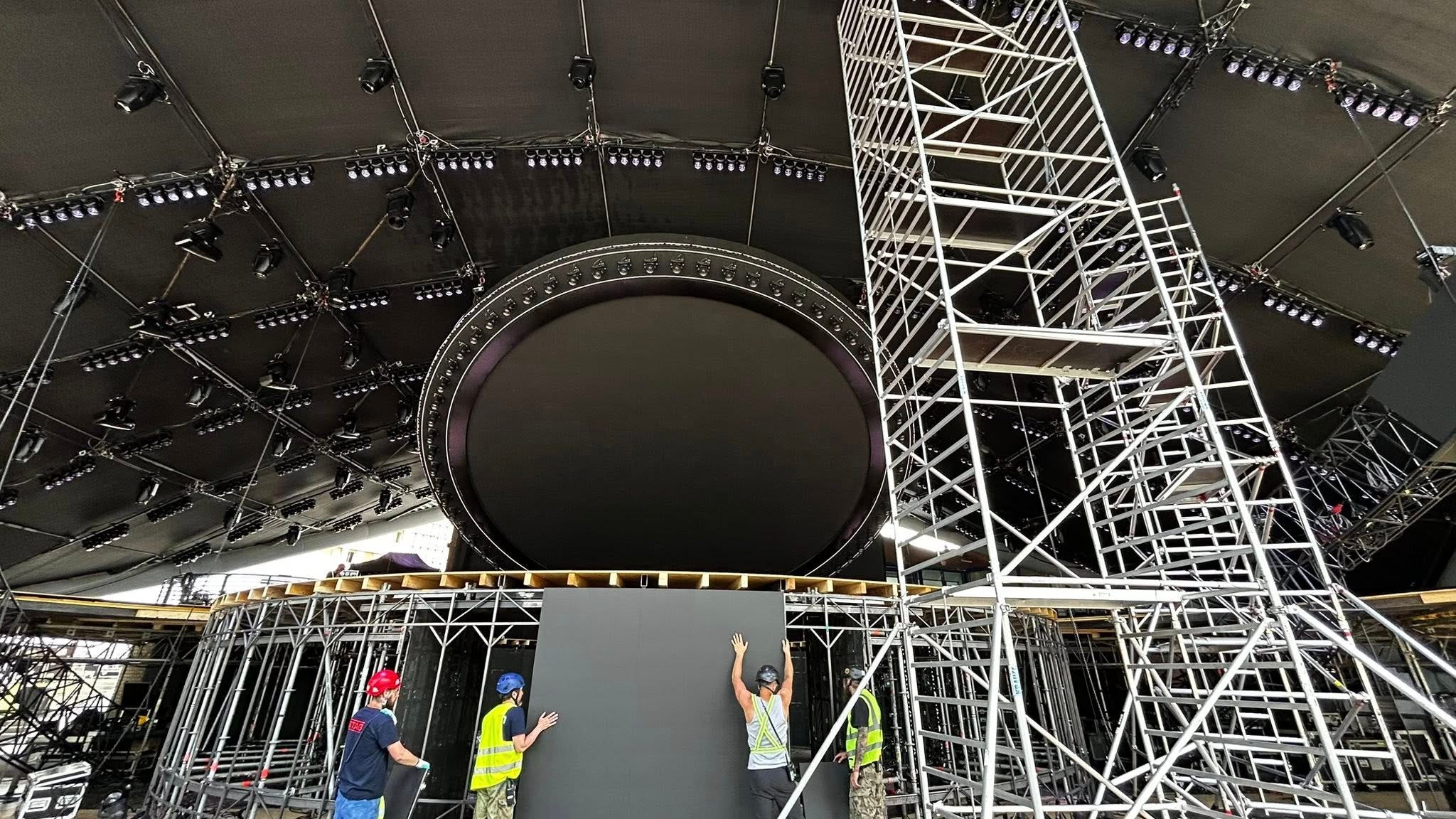
In the entertainment technology industry, the phrase full-service technical production is used often, but not always understood properly.
For some clients, it means hiring a company that can provide LED screens, lighting, sound, truss, rigging, media servers, power distribution, technicians and transport.
For others, it means working with a partner who can take care of everything technical, from the first idea to the final show.
Both interpretations are partly correct.
But full-service technical production is much more than equipment rental, crew supply or a long list of technical services.
At its core, full-service technical production means taking responsibility for turning a creative idea into a working technical reality.
It is the process of planning, designing, supplying, integrating, installing and operating the technical systems needed to deliver a live event, concert, esports tournament, television production, immersive experience, corporate show, brand activation, exhibition, entertainment venue or location-based attraction.
It connects technology, people, logistics, timing, safety, budget and creative ambition into one coordinated system.
And that word — system — is important.
Because modern entertainment projects are no longer built from isolated technical departments.
Video affects lighting.
Lighting affects camera.
LED affects scenic design.
Scenic design affects rigging.
Rigging affects venue feasibility.
Venue feasibility affects budget.
Budget affects technology choices.
Technology choices affect the final audience experience.
A good full-service technical production company understands all of these connections.
A great one manages them before they become problems.
That is why the discussion about why clients choose one live production technical partner over another is really a discussion about trust, responsibility and the ability to protect the result — not just about price.
What is full-service technical production?
A practical definition would be this:
Full-service technical production is the integrated planning, coordination, supply, installation and operation of all technical systems required to deliver a live event, show, immersive experience or entertainment technology project, with one partner responsible for making the project technically possible, reliable and safe.
This usually includes areas such as:
technical concept development
technical design and system planning
LED screens and video systems
lighting systems
audio systems
rigging and staging coordination
media servers and content playback
signal distribution and networking
power distribution
automation and show control
crew planning
logistics and transport
installation and build-up
rehearsals and programming
live operation
dismantling and post-project analysis
But this list does not fully explain the value.
The value is not only that one company can provide many services.
The value is that one company understands how these services work together.
That is the difference between a supplier and a technical production partner.
A supplier delivers what was ordered.
A technical production partner helps define what should be ordered in the first place.
This is also why companies that combine technical production, design, equipment rental and AVL distribution into one entertainment technology ecosystem can often make better decisions than companies looking only at one part of the chain.
Full-service technical production is not just equipment rental
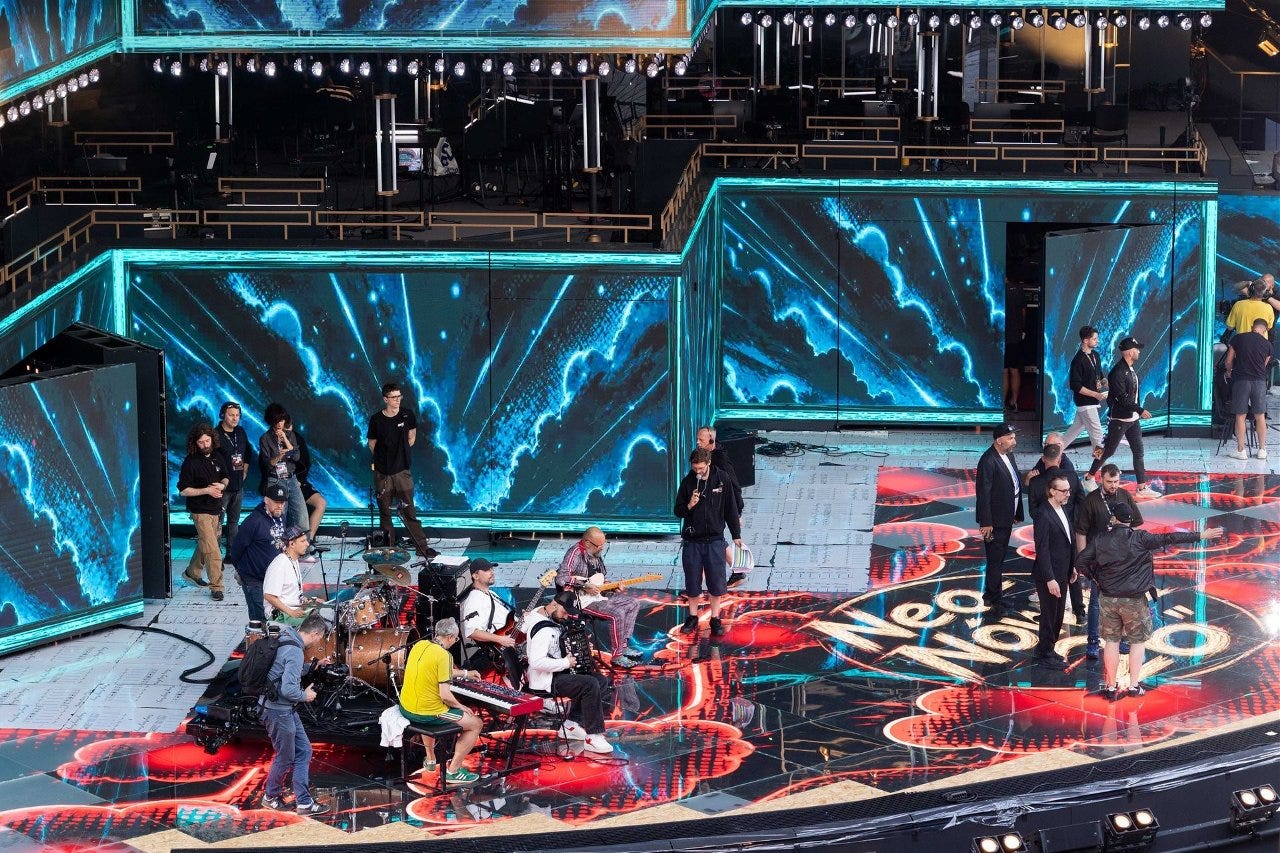
One of the most common misunderstandings in the live events industry is the difference between equipment rental and technical production.
Equipment rental answers the question:
What equipment do you need?
Technical production answers a wider and more important question:
What technical solution will make this project work?
A rental company may provide LED screens, lights, audio systems, media servers, truss, hoists, cables and control desks.
A full-service technical production company must understand why those elements are needed, how they should be connected, whether they are appropriate for the venue, whether the budget is realistic, whether the schedule is possible, whether the system can be built safely, and whether the final effect supports the creative goal.
This is why full-service production is not only about having a warehouse full of technology.
It is about know-how.
It is about technical judgement.
It is about experience.
It is about responsibility.
It is about understanding what happens when a drawing becomes a real stage, with real people, real deadlines, real venue limitations and real pressure.
In live production, the cheapest technical option is not always the cheapest option in the end.
A badly designed system can create delays, safety issues, additional crew costs, unnecessary complexity, lower visual impact and stress during showtime.
A good technical production partner protects the project from those hidden costs.
This is also where event production in Europe requires cost discipline without creative compromise, because strong production is not about spending more. It is about spending intelligently.
Why full-service technical production matters now
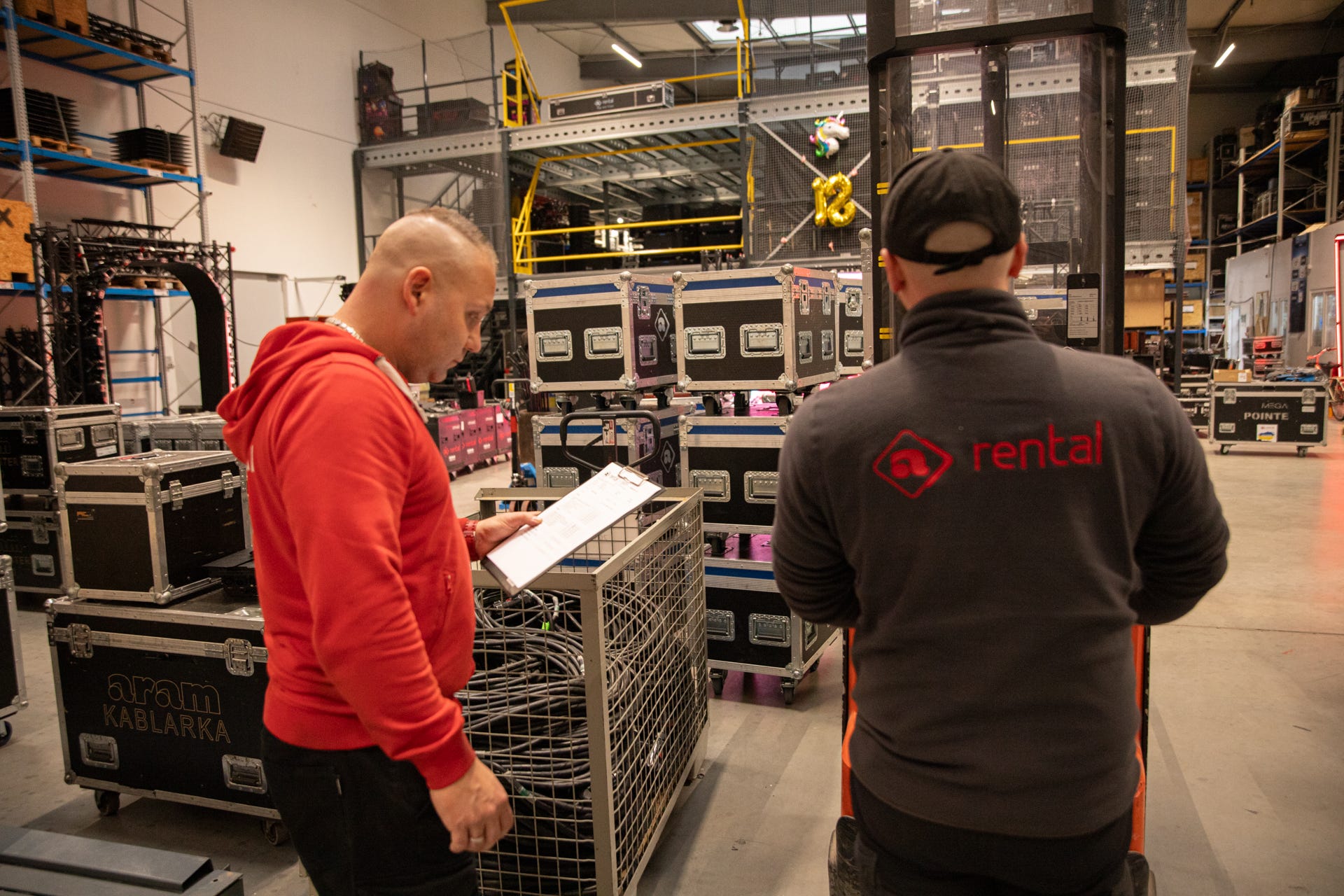
The role of full-service technical production is becoming more important because entertainment technology is becoming more complex.
A few years ago, many events could be managed as separate technical departments.
Lighting was lighting
Video was video
Audio was audio
Rigging was rigging
Content was content.
Today, that separation is increasingly artificial.
LED screens are not just video surfaces anymore. They can become stage architecture, scenic design, immersive walls, transparent layers, ceilings, floors, tunnels, brand environments and interactive media surfaces.
Lighting is no longer only about illumination. It can be pixel-mapped, timecoded, integrated with media servers, designed for cameras and synchronized with content.
Audio systems are not only about volume. They shape emotion, direction, immersion and audience experience.
Media servers are not only playback machines. In many projects, they become the control center for the visual environment.
Automation, show control, tracking systems, interactivity, sensors and data-driven experiences are becoming part of live entertainment, museums, brand spaces, gaming venues and immersive attractions.
This means that the technical partner must understand the whole ecosystem.
Not only one discipline.
Not only one product category.
Not only one department.
The best full-service technical production companies see the complete picture.
They know when technology supports the creative idea.
They also know when technology starts to work against it.
That is one of the major themes behind current live event technology trends for 2026, including AI, hybrid fixtures and transparent LED screens. The industry is not simply adding more technology. It is trying to build smarter, more modular and more scalable technical systems.
The client is not buying equipment. The client is buying certainty
In many event and entertainment projects, the client does not really want to buy LED screens, lighting fixtures, speakers, cables or media servers.
The client wants the product launch to look premium.
The client wants the concert to feel powerful.
The client wants the esports event to look international.
The client wants the immersive room to impress visitors.
The client wants the conference to run without technical failures.
The client wants the brand experience to be memorable.
The client wants the venue to open on time.
The client wants the audience to feel something.
Technology is the tool.
The experience is the goal.
That is why full-service technical production is really about reducing uncertainty.
Can the project be built?
Can it be installed on time?
Will it fit the venue?
Will it be safe?
Will it look good on camera?
Will the LED system handle the content resolution?
Will the lighting work with the screen brightness?
Will the audio coverage be correct?
Will the rigging be possible?
Will the crew understand the schedule?
Will the system be serviceable during the event?
Will the show work when the doors open?
These are the questions that matter.
A strong technical production partner answers them early.
A weak one discovers them on site.
This is why practical, producer-focused thinking matters so much. Publications such as Front & Back — Event Production Insights for producers, creatives and agency teams making complex events happen are important because they focus on the real-world side of production: timing, workflow, predictability, safety and the hidden pressure behind polished events.
The system view: why everything is connected
The biggest value of full-service technical production is the ability to see the project as a system.
This is especially important in large live events, concerts, festivals, television productions, esports events, immersive spaces and location-based entertainment venues.
A simple example: an LED wall is never just an LED wall.
It affects:
stage design
content format
media server specification
rigging load
power demand
camera exposure
lighting levels
viewing distance
transport volume
build-up time
crew requirements
service access
safety planning
budget
If the LED wall is selected only by pixel pitch and price, the project may already be in trouble.
The same applies to lighting.
A lighting rig is not only a list of fixtures.
It affects roof load, truss design, power, control networks, camera image, audience experience, setup time, programming time and maintenance access.
The same applies to audio, automation, scenic elements and media servers.
In a fragmented supplier model, each company may optimize its own part.
The video company optimizes video.
The lighting company optimizes lighting.
The rigging company optimizes rigging.
The content studio optimizes content.
But who optimizes the whole project?
That is where full-service technical production becomes essential.
It is also why the biggest lie in event design is that the render is the project. A render can communicate intention, mood and ambition. But it does not prove that the system can be built, rigged, powered, serviced, operated and delivered within the real constraints of the venue and schedule.
One accountable technical partner
Modern clients increasingly prefer one accountable technical partner because complex projects are difficult to manage through disconnected suppliers.
When there are too many separate technical companies, responsibility can become unclear.
If the content does not play correctly, is it a content issue, media server issue, processor issue, resolution issue, signal issue or screen issue?
If the lighting does not look good on camera, is it a lighting design problem, camera setting problem, LED brightness problem, stage layout problem or schedule problem?
If the build-up is delayed, is it because of rigging, logistics, access, crew planning, trucking, venue rules or unrealistic design?
The client does not want every supplier to explain why the problem is not their fault.
The client wants the project to work.
A full-service technical production partner reduces the number of gaps between disciplines.
It creates one technical brain for the project.
This does not mean one company must own everything or do everything alone.
In high-level projects, specialist partners are often needed.
But someone must take responsibility for integration.
Someone must understand the technical system as a whole.
Someone must protect the final result.
In practical terms, this is the difference between ordering equipment and working with a technical production partner who turns creative visions into buildable projects.
Full-service does not mean doing everything alone
There is an important distinction here.
Full-service technical production does not mean that one company should exclude designers, agencies, content studios, architects, venue teams or specialist subcontractors.
That would be unrealistic and often harmful.
The best projects are usually collaborative.
A strong technical production company can work with:
creative agencies
show designers
lighting designers
stage designers
content studios
architects
broadcast teams
venue operators
manufacturers
dry-hire rental companies
local suppliers
specialist subcontractors
But in this collaborative environment, someone still has to connect the dots.
That is the role of the full-service technical production partner.
It translates creative ideas into technical systems.
It translates technical limitations into clear decisions.
It helps the client understand what is possible, what is risky, what is expensive, what is unnecessary and what is essential.
It does not replace creativity.
It makes creativity buildable.
This is why many agencies and producers look for a partner in event technology, not just a provider of equipment. In complex productions, the value is not only in the gear. It is in the ability to coordinate people, technology, schedule, venue limits and final expectations.
The role of the technical project manager
At the center of full-service technical production is the technical project manager.
This is one of the most important roles in the entertainment technology industry.
A technical project manager is not just an administrator.
The role is not only about sending emails, updating schedules and collecting quotations.
A good technical project manager understands equipment, people, logistics, venue reality, technical drawings, budgets, crew planning, safety, timing and client communication.
They know how a show is built.
They know where mistakes usually happen.
They know when a design is unrealistic.
They know when a supplier is underestimating complexity.
They know when the client needs a clear decision.
They know how to protect the creative idea without ignoring the technical reality.
This is why many strong technical project managers come from hands-on production backgrounds.
They have worked on site.
They have experienced real load-ins.
They have seen what happens when the plan is not clear.
They understand that the last 10% of a project often creates 50% of the stress.
For more on this career path, read how hands-on technicians can become technical project managers in live event production.
This transition matters because modern production needs people who can connect two worlds: the practical world of the crew and the strategic world of planning, budgeting, communication and responsibility.
Full-service technical production in live events
In live events, full-service technical production usually covers the complete technical environment of the show.
This may include stage technology, LED screens, projection, lighting, sound, rigging, truss, automation, media servers, signal distribution, power, crew and live operation.
But each type of event has a different technical logic.
A corporate event needs clarity, reliability, clean visuals, good speech intelligibility and often a camera-friendly setup.
A concert needs emotional impact, scale, lighting energy, visual rhythm, touring logic and fast changeovers.
A festival needs weather resistance, modular systems, strong logistics and service access.
A television show needs lighting and video systems that work not only for the audience in the room, but also for cameras.
A product launch needs precision, timing, reveal moments, brand control and technical confidence.
An esports event needs stage design, broadcast quality, player visibility, audience experience, sponsor visibility, low-latency signal flow and technical reliability.
A full-service technical production company must understand the format before selecting the technology.
The same LED wall, lighting rig or sound system can be perfect for one project and wrong for another
Technology has no value outside context
That is why a technically grounded approach to cost-effective stage design that works in real production, not only in a visual concept is so important.
Full-service technical production in esports and gaming events
Esports is a good example of why full-service technical production requires integrated thinking.
An esports event is not just a stage show.
It is also a broadcast production, a competitive environment, a fan experience, a sponsor platform and often a complex IT and signal workflow.
The technical production partner must think about:
player positions
referee visibility
audience sightlines
LED screen placement
lighting for cameras
lighting comfort for players
broadcast signal flow
replay and observer systems
sponsor visibility
stage design
audio management
show calling
timing
redundancy
crowd experience
In esports, a visually impressive stage is not enough.
The show must look good on stream, work for players, support the tournament format, serve sponsors and create energy in the room.
That is why esports production is often a demanding test for full-service technical production companies.
It combines entertainment, broadcast, gaming culture, live audience design and technical reliability.
A good real-world example is the technical production of esports events behind PMGC 2024, where the production challenge is not only visual impact, but also broadcast logic, timing, player environment and technical reliability.
Another example of how esports is moving into permanent entertainment infrastructure is the Ferrari Esports Arena as a permanent gaming attraction. This type of project sits exactly between esports, immersive technology, brand experience and location-based entertainment
Full-service technical production in immersive experiences
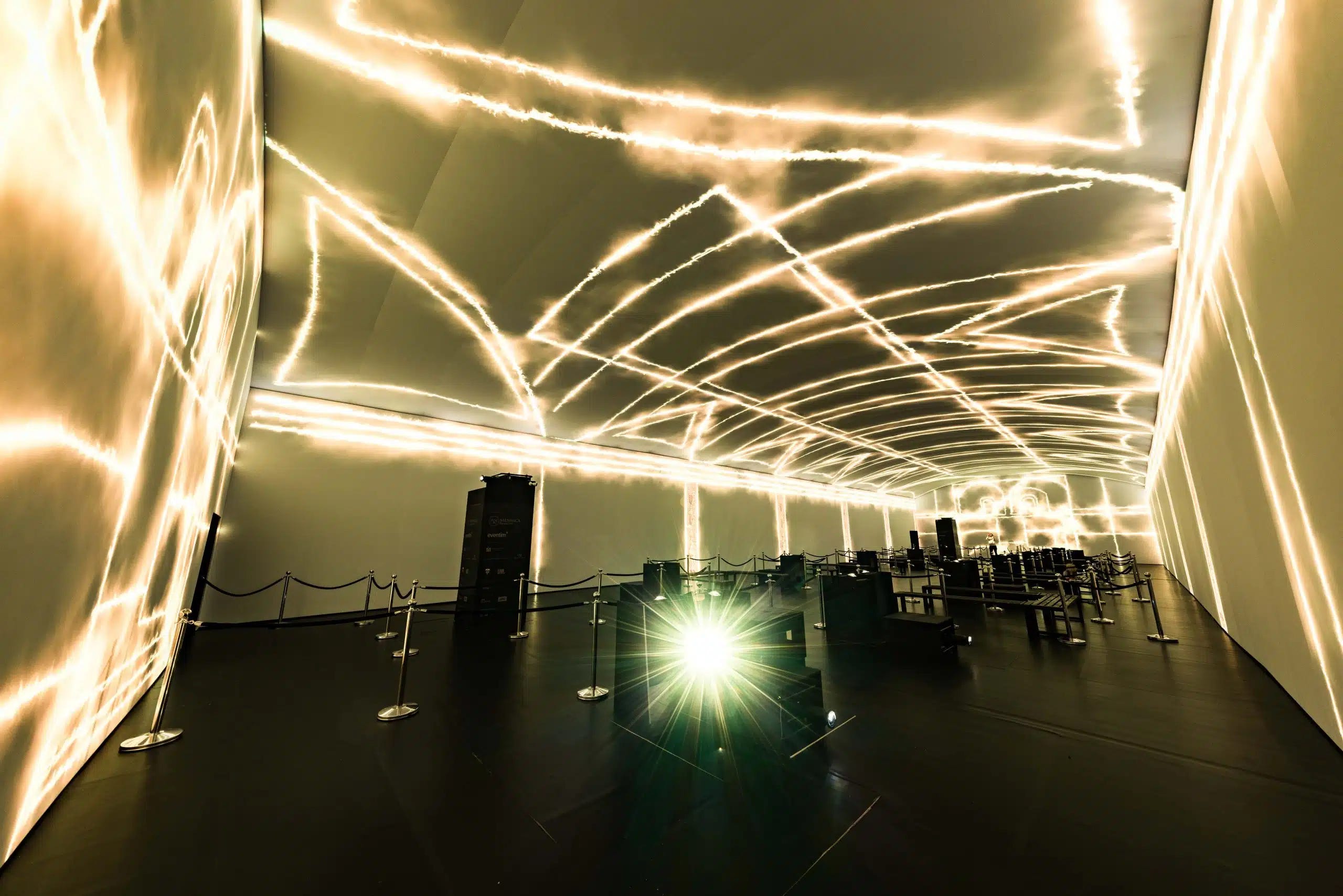
Immersive experiences create an even stronger need for integrated technical thinking.
In an immersive space, the audience is not only looking at a stage.
They are inside the experience.
That changes the technical requirements completely.
Projection, LED, sound, lighting, sensors, show control, media servers, content, scenic elements, architecture, visitor flow and maintenance must work together.
The technical system is not hidden behind the show.
It becomes the show environment.
This is why immersive projects cannot be treated like standard AV installations or simple event setups.
They require technical design, creative sensitivity and operational planning.
A system that looks good in a demo may fail in daily operation.
A projection setup that works during installation may be difficult to maintain.
An LED environment that looks impressive may create heat, service or viewing-angle problems.
A room that creates a beautiful effect may still fail if visitor flow is poor.
A full-service technical production partner must think not only about opening day, but also about long-term operation.
This is especially important for museums, brand experience centers, themed attractions, entertainment venues, gaming centers, cruise ships, hotels, malls and semi-permanent immersive spaces.
For fixed projects, the same logic applies to choosing a partner in AVL installation who can support the full vision, not only install equipment.
For mobile or semi-permanent concepts, the industry is also moving toward deployable formats such as touring immersive venues that can be installed and operated in different locations.
Full-service technical production in location-based entertainment
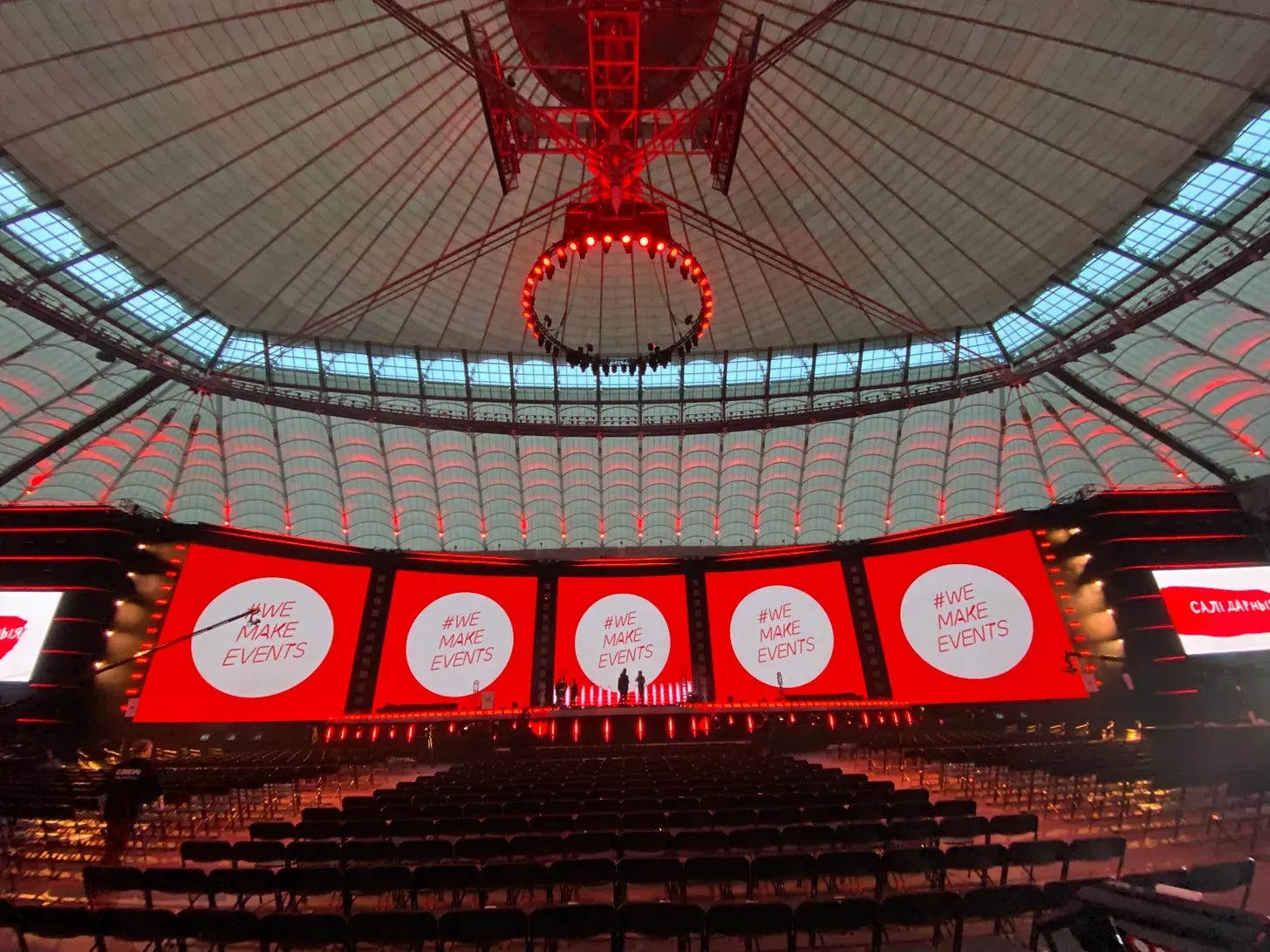
Location-based entertainment is one of the most interesting growth areas for full-service technical production.
Theme parks, family entertainment centers, esports venues, immersive museums, gaming arenas, brand experience centers, cruise ships, shopping malls and hotel entertainment spaces are changing quickly.
Audiences expect more interaction, more immersion, more screens, more dynamic environments and more technology-driven storytelling.
Older entertainment formats are being upgraded with LED screens, projection, lighting, audio, interactive systems, media servers, automation and show control.
But permanent or semi-permanent entertainment venues are not one-night events.
They must operate repeatedly.
Sometimes every day.
Sometimes for years.
That means the technical solution must be creative, but also durable, serviceable, safe and commercially realistic.
Full-service technical production in location-based entertainment may include:
concept feasibility
technical consulting
system design
equipment specification
integration
installation
testing
staff training
maintenance planning
operational support
future upgrade planning
This is where the borders between live event production, AV integration and themed entertainment become increasingly connected.
The future belongs to technical partners who understand all three worlds.
For example, creating an immersive entertainment center requires more than projection, LED or audio equipment. It requires a business-aware technical concept, visitor-flow thinking, content strategy, spatial planning, operations and a system that can survive real public use.
Why LED screens changed technical production
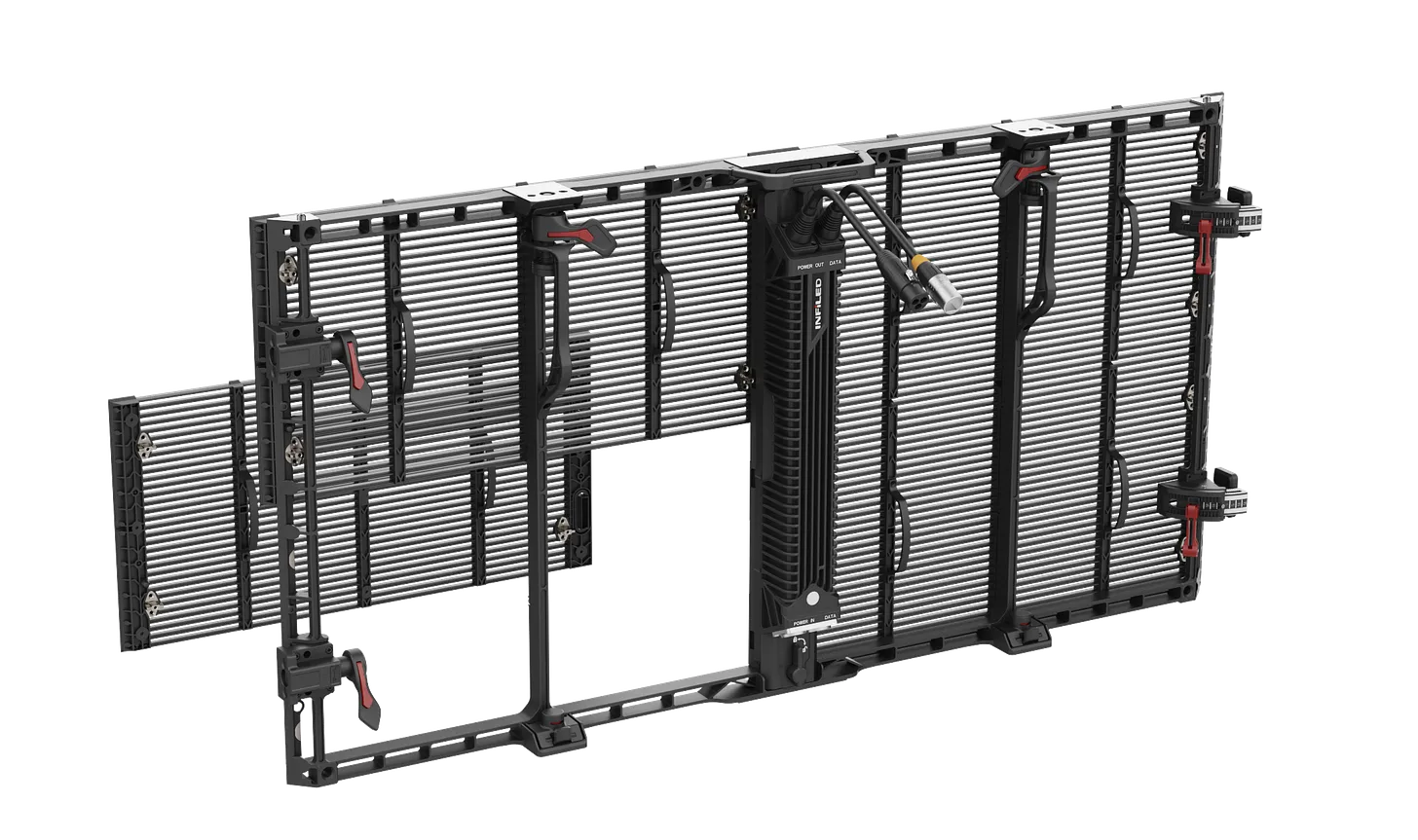
LED technology has changed the meaning of technical production.
In the past, video was often treated as a support element.
Today, LED can become the main scenic material.
It can define the architecture of the stage.
It can replace traditional scenic builds.
It can create immersive rooms.
It can act as a lighting source.
It can carry sponsorship.
It can transform a venue instantly.
It can turn a simple space into a branded environment.
But LED is also one of the most misunderstood technologies in entertainment.
Pixel pitch, brightness, refresh rate, scan rate, processing, weight, rigging system, transparency, wind load, touring frames, service access, calibration, camera performance, power distribution and signal redundancy all matter.
Two LED screens may look similar in a quotation but behave very differently on site.
This is why full-service technical production companies need deep LED knowledge.
Not just to sell LED.
But to choose the right LED system for the job.
If you are planning a permanent installation, it is worth understanding how to choose the right LED screen installation and what really matters beyond the first visual impression.
If you are planning a very large live production, transparent LED curtains are a good example of how the technology is changing stage design.
For large-scale concerts, festivals and touring productions, transparent LED can create huge visual scale with lower weight and different wind behavior than traditional solid LED walls.
But it also requires proper planning around rigging, content design, brightness, viewing angles, processing and stage lighting.
You can read more in this analysis of holo-transparent LED for touring and large-scale stage productions and in this article about one of the largest transparent LED curtain rental stocks in Europe.
Media servers, signal flow and control systems
Another reason full-service technical production has become more complex is the growing importance of media servers, signal distribution and show control.
In many modern productions, the visual system is no longer a simple playback chain.
It may include:
multiple media servers
backup systems
LED processors
projection mapping
camera feeds
live inputs
timecode
tracking systems
interactive inputs
control networks
preview monitors
broadcast outputs
recording systems
remote control points
A small mistake in signal planning can create major problems.
Wrong resolutions, missing converters, poor cable planning, unstable networks, weak redundancy or unclear responsibility can all create stress during rehearsals or showtime.
This is why the technical production partner must understand the complete signal flow.
Not only the screen.
Not only the server.
Not only the content.
The whole chain.
In high-pressure live environments, reliability is designed before the event.
It is not improvised during the event.
This is especially visible in television and broadcast-driven events, where an event can look completely different on TV than it does in the room, and technical production decisions must account for cameras, lighting, LED refresh, content contrast and timing from the beginning.
Value engineering: not cheaper, but smarter
Value engineering is often misunderstood as cost cutting.
In full-service technical production, value engineering means finding the smartest relationship between creative impact, budget, risk, logistics and reliability.
Sometimes the cheapest solution becomes expensive because it creates delays or requires additional crew.
Sometimes the most expensive technology does not improve the audience experience.
Sometimes a simpler rig produces a better result.
Sometimes fewer LED pixels are enough.
Sometimes a lighter system is more valuable than a higher-resolution system.
Sometimes one well-designed screen surface is better than five poorly integrated screens.
Sometimes reducing complexity protects the show.
A strong technical production partner should be able to challenge assumptions.
Do we really need this much equipment?
Can the lighting system do more than one job?
Can the LED design be simplified without losing impact?
Can the media server workflow be more reliable?
Can the rig be lighter?
Can the system travel better?
Can we reduce build-up time?
Can we protect the budget without damaging the creative idea?
This is where technical production becomes strategic.
Not just operational.
This is also why the question is not only “how much does the production cost?” but “what creates the result, what creates the risk, and what only creates complexity?”
That mindset sits behind cost discipline in European event production without creative compromise, and it is one of the most important differences between average suppliers and serious technical production partners.
The role of dry-hire, distribution and equipment ecosystems
Full-service technical production does not exist in isolation.
It is supported by a wider equipment ecosystem.
Dry-hire rental companies, distributors, manufacturers, service teams and specialist suppliers all play an important role.
A production company with access to a strong rental network can scale faster, manage risk better and select more appropriate technology.
A dry-hire company with a modern equipment base can support multiple production companies, rental partners and designers.
A distributor with real market knowledge can help identify which technologies are reliable, serviceable and worth investing in.
The strongest entertainment technology ecosystems connect:
dry-hire rental
equipment distribution
service and maintenance
training
installation
long-term technology strategy
This matters because full-service technical production is not only a project-by-project service.
It can become part of a larger platform.
A company that understands production, rental and distribution can make better investment decisions, build stronger equipment standards and support more ambitious projects.
That is why an integrated model combining ARAM, A-RENTAL and AV LIGHT as technical production, dry-hire rental and AVL distribution companies is not only a company description. It is a model of how entertainment technology platforms may evolve.
How AI will affect full-service technical production
Artificial intelligence will not replace full-service technical production.
But it will change how technical production companies work.
AI can already support:
research
documentation
technical writing
translation
early concept development
visual references
project planning
knowledge management
equipment comparison
workflow checklists
training materials
sales support
risk analysis
But AI does not automatically understand the reality of a live production.
It does not know what a tired crew can realistically build after midnight.
It does not understand every local venue limitation.
It does not feel the pressure of showtime.
It does not replace technical judgement.
It does not replace a production manager who knows when something is risky.
It does not replace an experienced engineer who can see a weak point in the system before it fails.
The best future model is not AI instead of production experts.
It is production experts using AI to work faster, document better, compare options, train teams, reduce avoidable mistakes and communicate more clearly.
This may actually make strong full-service technical production companies more valuable.
As tools become more powerful, judgement becomes more important.
For a broader view of where the industry is heading, read live event technology trends for 2026, including AI, hybrid fixtures and transparent LED systems and whether AI will replace or reshape jobs in entertainment technical production.
How to choose a full-service technical production partner
Choosing a full-service technical production company should not be based only on the lowest price.
Price matters.
Budgets are real.
But in technical production, the lowest quote may not represent the lowest risk.
Before choosing a technical production partner, clients should ask:
Does the company understand the creative goal?
Can it explain the technical concept clearly?
Does it have experience in similar projects?
Does it understand LED, lighting, audio, rigging, power, signal, media servers and logistics as one system?
Can it prepare proper technical documentation?
Can it coordinate with designers, agencies, venues and suppliers?
Does it understand safety and buildability?
Can it scale if the project grows?
Can it respond when something changes?
Does it have access to the right equipment and crew?
Can it simplify the technical solution without weakening the final effect?
Can it protect the project under pressure?
That last question may be the most important.
Because in live production, pressure is guaranteed.
Something always changes.
Something always arrives late.
Something always needs a decision.
Something always works differently on site than it did in the plan.
The value of a technical production partner is not that nothing ever goes wrong.
The value is that when something changes, the partner knows what to do.
This is why trust is often more important than price when choosing a live production technical partner. The client is not only choosing a supplier. The client is choosing who will stand next to them when the project becomes difficult.
What full-service technical production is not
To understand the term clearly, it also helps to define what it is not.
Full-service technical production is not just equipment rental.
It is not just crew supply.
It is not just AV installation.
It is not just lighting design.
It is not just LED screen rental.
It is not just rigging.
It is not just project management.
It is not just logistics.
It is not just a long quotation with many technical categories.
It is the connection of all these elements into one responsible technical process.
A company may offer many services and still not be a true full-service technical production partner if nobody is thinking about the whole system.
The “full-service” part is not about having the longest list of services.
It is about owning the technical responsibility for the final result.
Frequently asked questions about full-service technical production
What is full-service technical production?
Full-service technical production is the complete technical planning and delivery of a live event, show, immersive experience or entertainment technology project. It usually includes system design, equipment, crew, logistics, installation, operation and technical project management.
Is full-service technical production the same as AV production?
Not exactly. AV production usually focuses on audio-visual systems. Full-service technical production can include AV, but it often goes wider: lighting, LED screens, rigging, staging, automation, power, media servers, show control, logistics and on-site operation.
Is full-service technical production the same as equipment rental?
No. Equipment rental provides technical equipment. Full-service technical production provides the complete technical solution, including planning, coordination, integration, crew, operation and responsibility for the final result.
Is full-service technical production only for large events?
No. Large events benefit from it most visibly, but smaller projects also need full-service technical thinking when technology, venue limitations, timing, safety or creative expectations create complexity.
Why do clients prefer one accountable technical partner?
One accountable technical partner can reduce communication gaps, improve coordination, simplify decision-making and protect the final result. Multiple suppliers can work well, but only if someone is clearly responsible for technical integration.
What does a technical production company provide?
A technical production company may provide LED screens, lighting, audio, rigging, staging, media servers, power distribution, signal systems, automation, crew, logistics, technical design, project management, installation and live operation.
Why is trust important in technical production?
Trust is important because live events have no undo button. When the audience enters, the system must work. Clients need partners who can plan properly, communicate clearly and solve problems under pressure.
Final thought
Full-service technical production is not a fashionable phrase.
It is a response to how complex entertainment technology has become.
As LED screens, lighting systems, audio, media servers, automation, immersive environments, show control, AI tools and hybrid event formats continue to evolve, clients need technical partners who can see more than one department at a time.
They need companies that understand technology, but also understand people, process, timing, safety, logistics, risk and responsibility.
The future of entertainment technology will not belong only to the companies with the most equipment.
It will belong to the companies that can turn complex technology into reliable experiences.
That is what full-service technical production really means.