

A practical look at lightweight multimedia architecture for exhibition stands, pop-up structures and brand environments
What can transparent LED curtains really build?

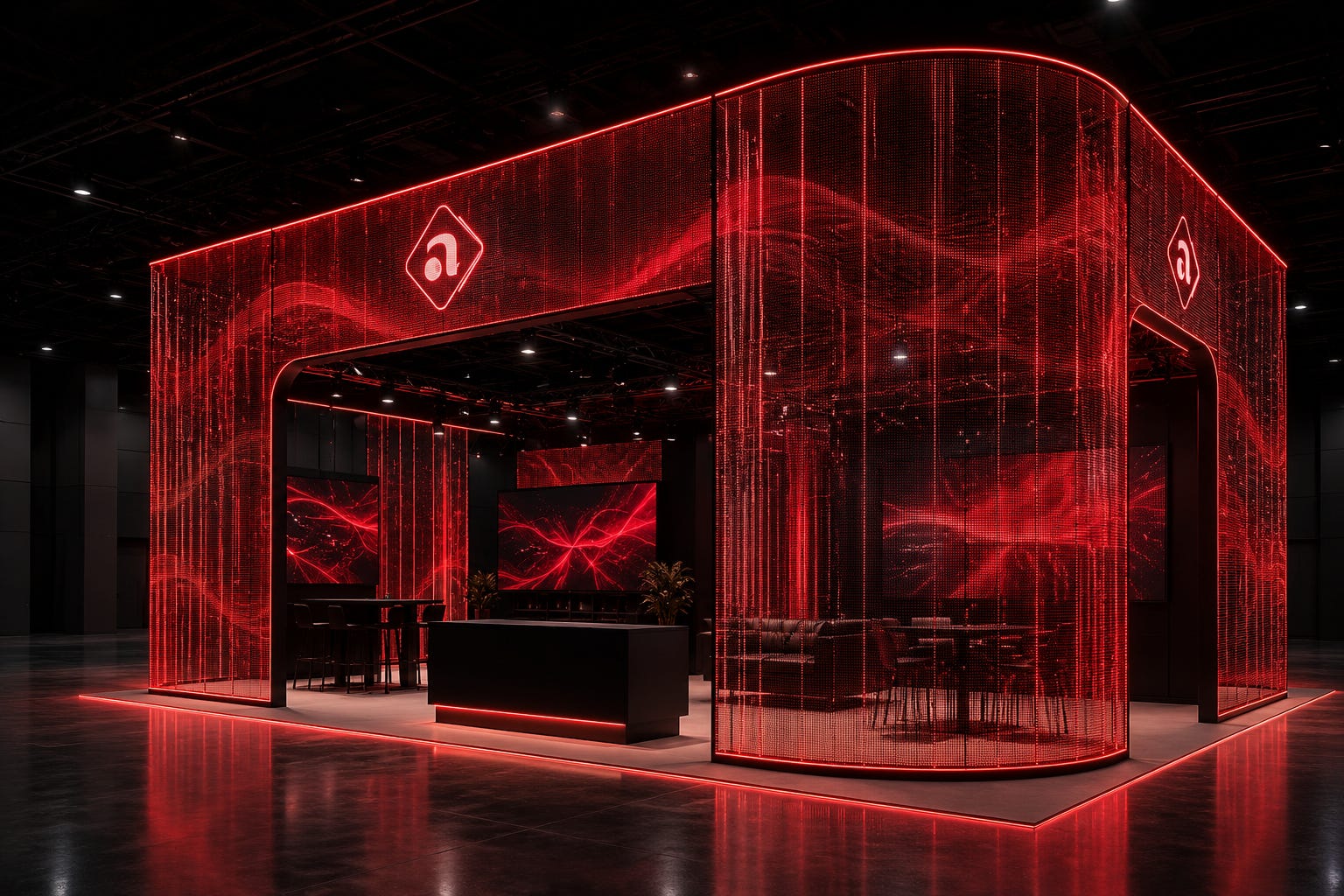
Transparent LED curtains are often presented through specifications: pixel pitch, brightness, transparency, refresh rate and weight.
All useful information.
But for designers, exhibition stand builders, creative agencies and production teams, the more important question is different:
What can this technology actually create?
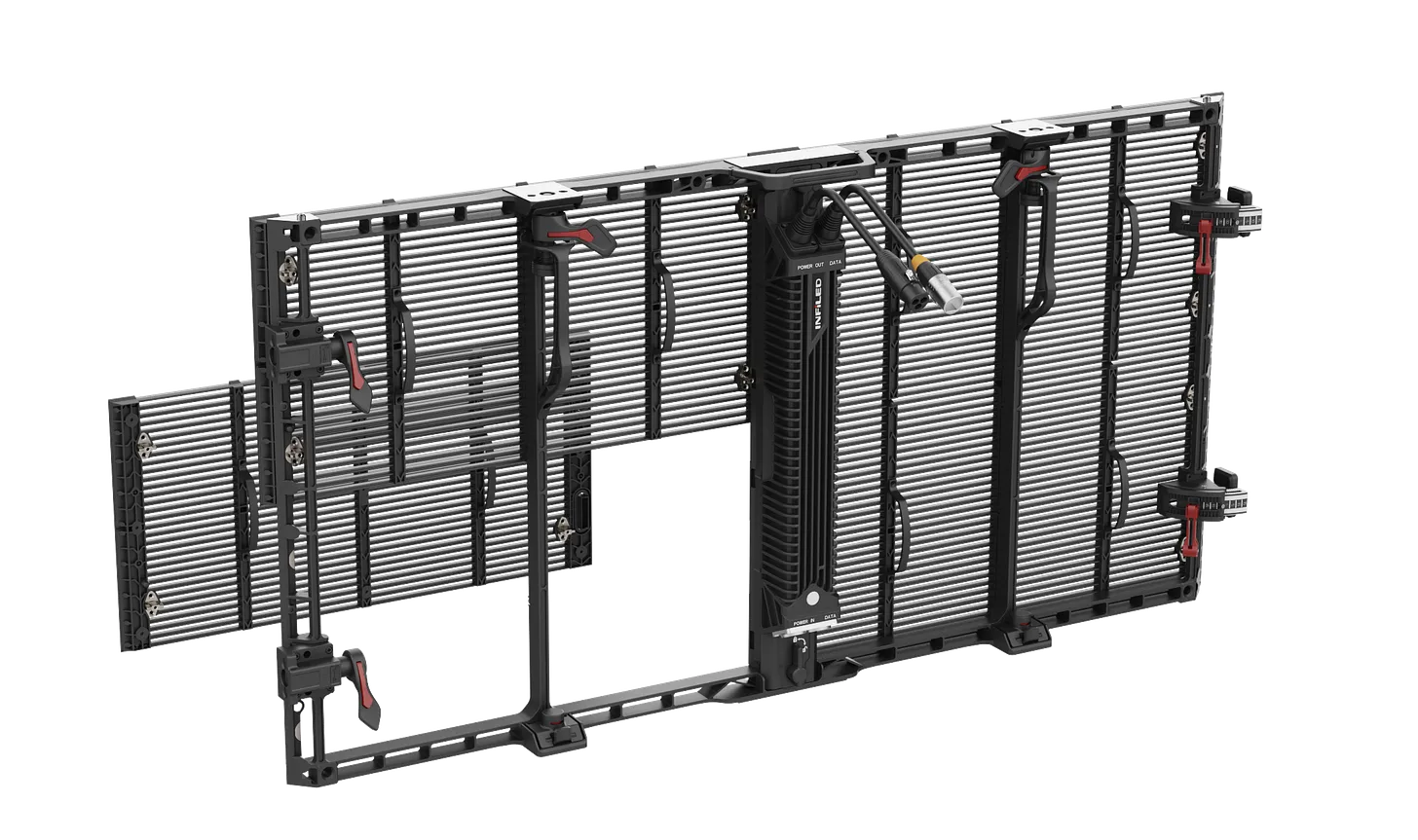
This is where transparent LED becomes interesting. It is not just another screen format. Used properly, it can become a lightweight architectural layer for building multimedia spaces, temporary structures, exhibition façades, brand zones and immersive environments.
Instead of adding a screen to a stand, the stand itself can become a dynamic media surface.
From display surface to architectural material
Traditional LED walls are usually treated as flat surfaces. They are powerful, bright and high-impact, but they also create visual and physical barriers.
Transparent LED curtains behave differently.
With around 50% transparency, they allow light, visibility and airflow through the structure. Visitors can still see people, products and activity inside the stand, while the outside surface displays dynamic content, motion graphics or brand communication.
That creates a different type of presence: open, lightweight, architectural and highly visible from a distance.
For exhibition environments, this matters. A stand needs to attract attention, but it also needs to invite people in.
A modular system for many stand sizes
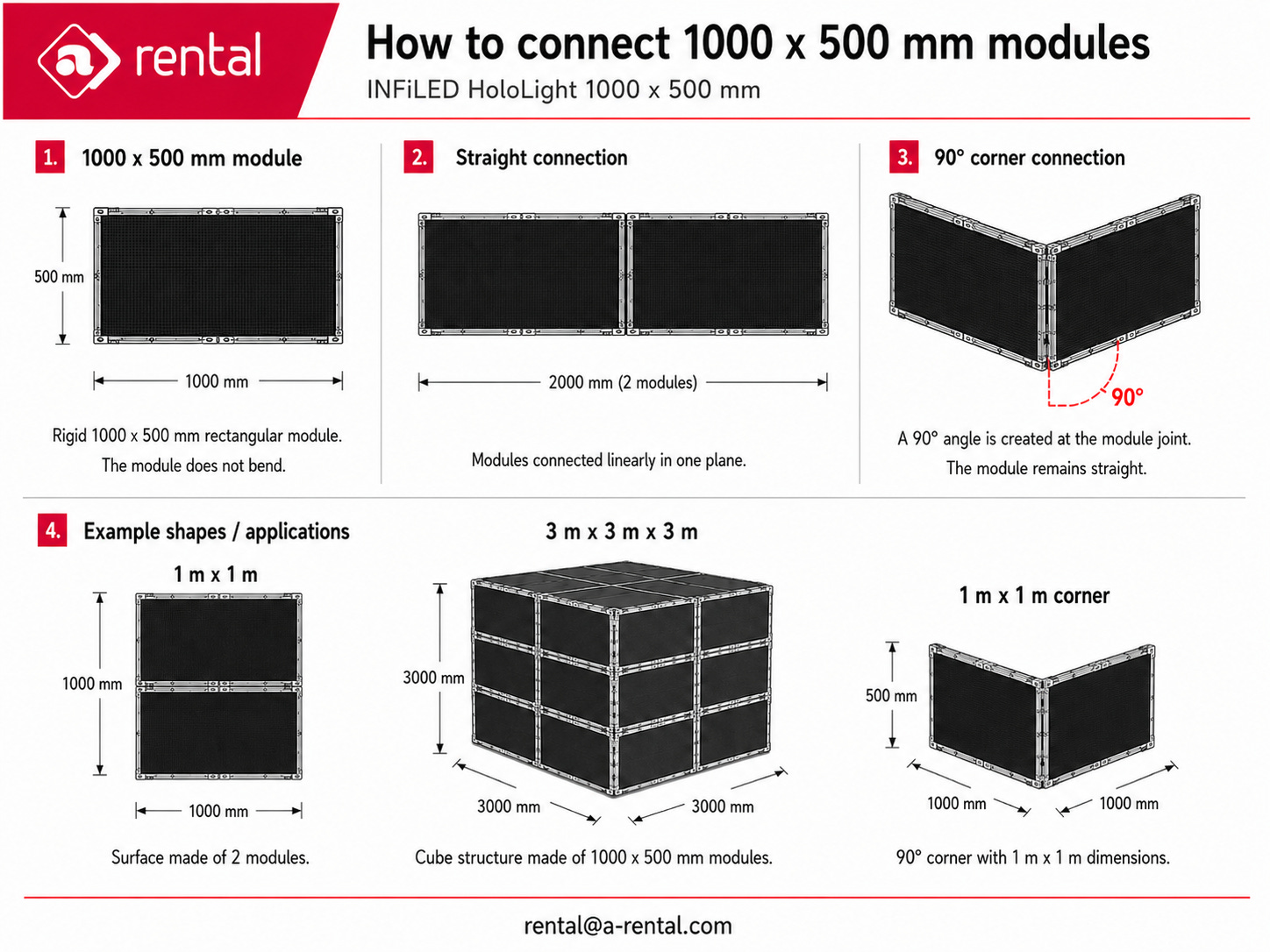
One of the strongest advantages of transparent LED curtain systems is modularity.
Based on standard panel sizes such as 1000 × 500 mm and 500 × 500 mm, the same technology can be used to create very different structures:
external stand walls,
internal multimedia partitions,
pop-up brand structures,
entrance portals,
tunnels,
cubes,
curved façades,
cylindrical forms,
sponsor zones,
product launch environments.
The same technical system can support a small indoor pop-up or a large exhibition booth. The dimensions, entrances, height and internal layout can change depending on the project.
That makes it useful not only as a visual effect, but as a practical building tool for temporary event architecture.
Why transparency matters outdoors
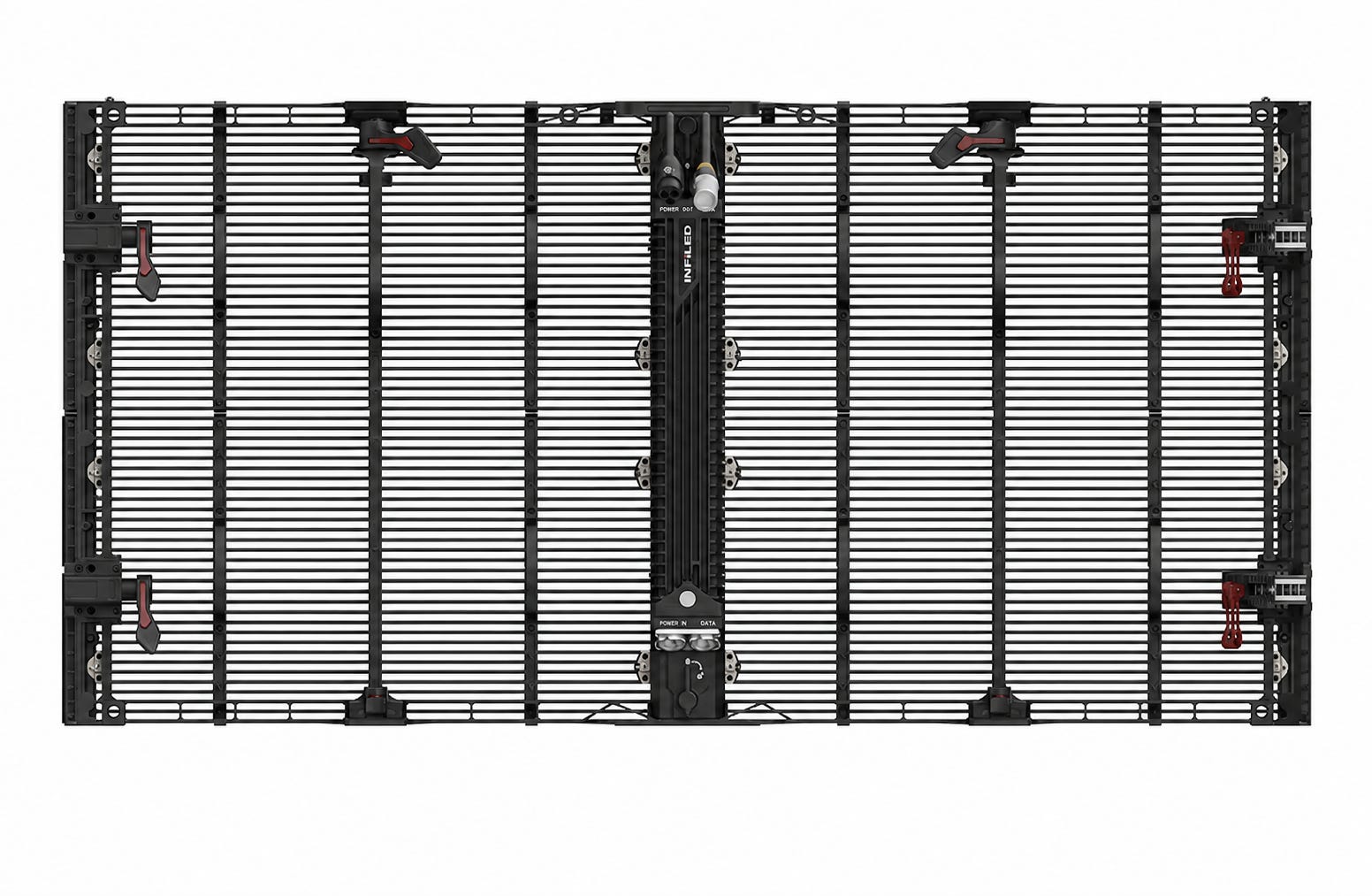
Transparency is not only a visual feature.
It also has a technical benefit.
Because air can pass through approximately half of the surface, wind load is significantly lower than with conventional solid LED walls. This makes transparent LED curtain systems particularly interesting for outdoor activations, temporary pavilions, sponsor villages, festival zones and entrance structures.
It does not remove the need for proper engineering, ballast, rigging and structural calculation.
But it gives designers and production teams a more flexible starting point when creating large multimedia surfaces in exposed environments.
Curves, corners and custom shapes
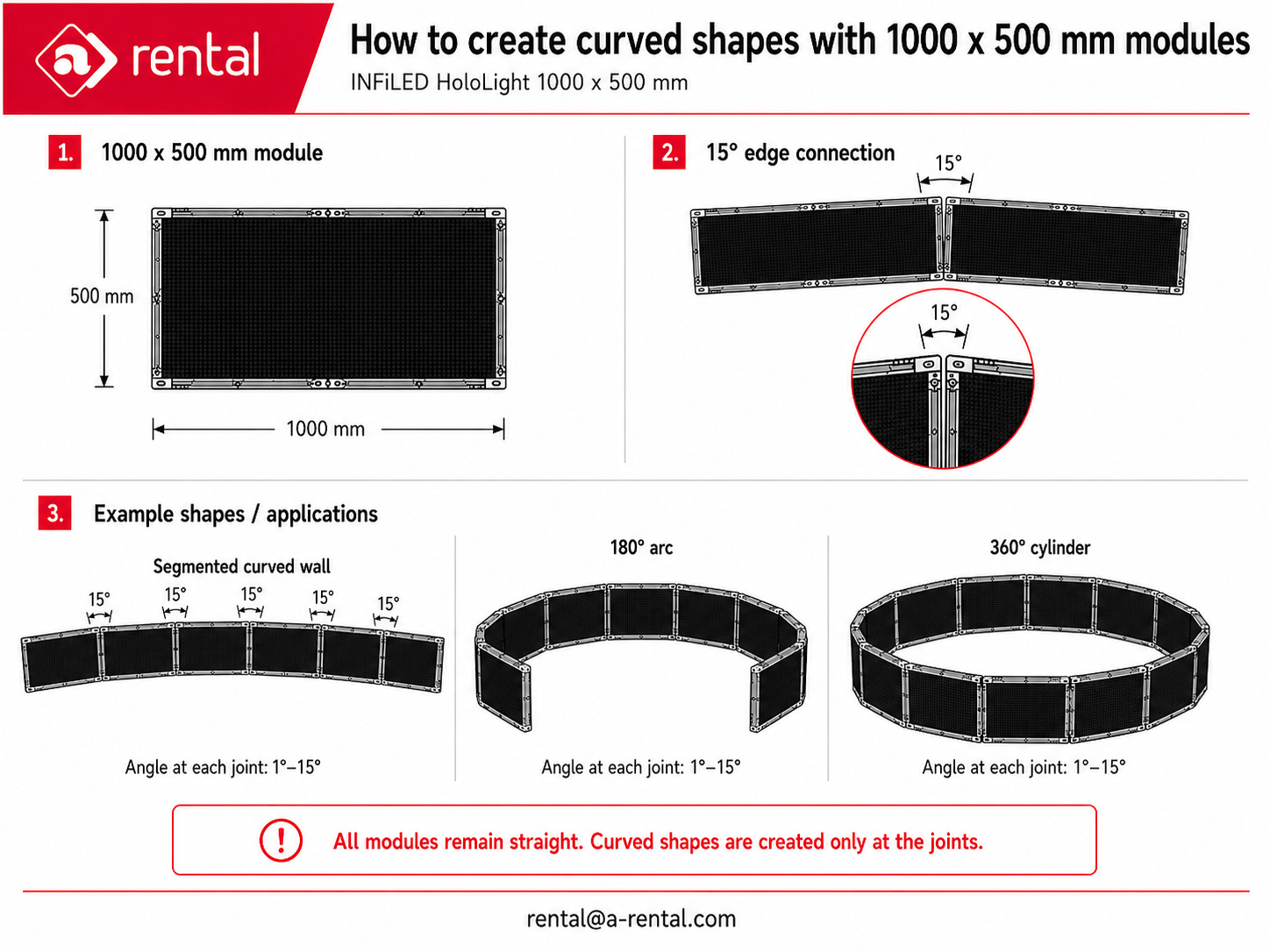
The most interesting applications appear when transparent LED is used beyond flat walls.
Modern curtain systems can support curved layouts, 90-degree corner connections and modular geometry, allowing structures to become more sculptural.
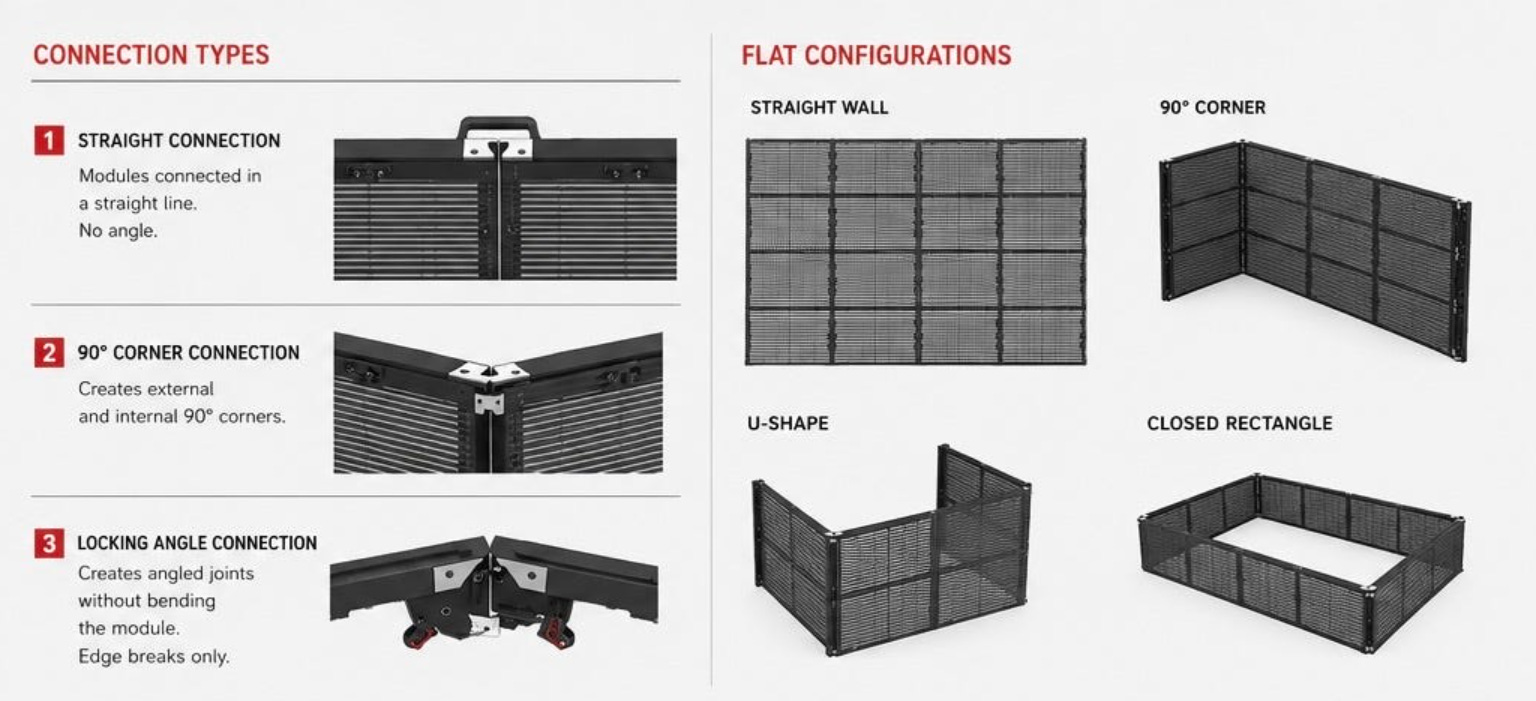
This opens the door to:
curved exhibition façades,
multimedia tunnels,
rounded corners,
transparent cubes,
360-degree installations,
lightweight scenic objects,
hybrid indoor-outdoor brand environments.
For creative teams, this means the conversation changes.
It is no longer only about where to place the screen.
It becomes about what kind of space the screen can help create.
Combining transparent LED with other technologies
Transparent LED is rarely the only technology in a high-quality project.
In many cases, it works best as the outer visual layer, combined with more detailed or interactive systems inside.
A typical multimedia environment might combine:
transparent LED curtain façades,
fine-pitch LED screens,
LCD displays,
interactive touchscreens,
projection mapping,
lighting design,
audio,
scenic elements,
synchronized media content.
The transparent LED layer attracts attention and creates the architectural identity. Higher-resolution displays inside can then handle product storytelling, presentations, demonstrations and detailed brand content.
That combination is often more effective than relying on one large screen alone.
Designed for a camera-first audience
Exhibition visitors now document everything.
They take photos, record videos, post stories and share short clips. That means a stand does not only need to look good on the show floor. It also needs to look good through cameras.
This is where high refresh rates matter. Systems with refresh rates above 7000 Hz can reduce visible flicker on smartphones and professional cameras, helping the content appear cleaner in recorded material.
For brands, this matters because the reach of a stand increasingly extends beyond the venue itself.
The booth becomes a content generator.
From concept render to production reality
AI tools have made it easy to generate spectacular exhibition concepts. But a strong visual idea is only the first step.
For a structure to be built, several practical questions need to be answered:
How is it suspended or supported?
What are the load limits?
Where are the entrances?
How is the cabling routed?
How is the system serviced?
How quickly can it be installed?
What happens in outdoor wind conditions?
How does the content align with the physical architecture?
This is why technical thinking should be part of the creative process from the beginning. Transparent LED curtain technology gives designers more freedom, but it still needs proper planning, engineering and production experience.
A solution for builders and creative teams
For exhibition stand builders, agencies and design studios, transparent LED curtains can be treated as a new construction layer.
They do not have to replace traditional stand design.
They can enhance it.
They can become the façade, the entrance, the perimeter, the visual skin, the pop-up structure or the immersive zone. The technology can be integrated into a wider concept, rather than forcing the entire project to revolve around a single screen.
That is probably the most important point.
Transparent LED is not only about brighter content.
It is about making temporary architecture more dynamic.
The future of multimedia stands & stages
The next generation of exhibition stands may not simply use bigger screens.
They may use screens as architecture.
Transparent LED curtains make this possible because they combine visibility, airflow, modularity, low weight and dynamic content in one system. For trade shows, brand activations, product launches, festivals and temporary environments, that combination can be very powerful.
A great stand is not defined by how many LED panels it uses.
It is defined by the experience those panels help create.
Also read:
Full-service technical production: what it really means ?

In the entertainment technology industry, the phrase full-service technical production is used often, but not always understood properly.
Visit at A-RENTAL: largest dry-hire company in Eastern Europe

A-RENTAL is the largest and probably the only pure dry-hire house in Poland that rents to global clients.