

Are creative LED video strips making a comeback
FRAMELED video strips.... successor of Barco MiStrip

Every few years, the live events industry rediscovers a simple truth: audiences have become surprisingly good at spotting repetition.
For over a decade, LED screens have transformed stages around the world. They have become brighter, lighter, more reliable, and more affordable. Yet as screens have become larger and more common, designers have increasingly looked for ways to break away from the familiar rectangle.
That search is hardly new.
Long before immersive tunnels, kinetic LED sculptures, and transparent LED installations became common talking points, products such as Barco MiStrip showed the industry that video content did not have to live exclusively inside a traditional screen. Suddenly, video could become part of the architecture itself. It could outline a stage, create depth, define shapes, and help designers build environments rather than simply display content.
MiStrip was ahead of its time.
Many of the creative concepts we now take for granted can trace their roots back to those early video strips hanging above festival stages and television sets. But while the creative potential was enormous, the technology often demanded compromises. Building ambitious structures required external hubs, additional signal distribution, more cabling, and more planning.
The visual result was often spectacular.
The setup process was not always quite as elegant.
Today, a new generation of products is beginning to rethink what creative video elements can be, and FRAMELED Pulse is perhaps one of the most interesting examples.
Not another LED strip
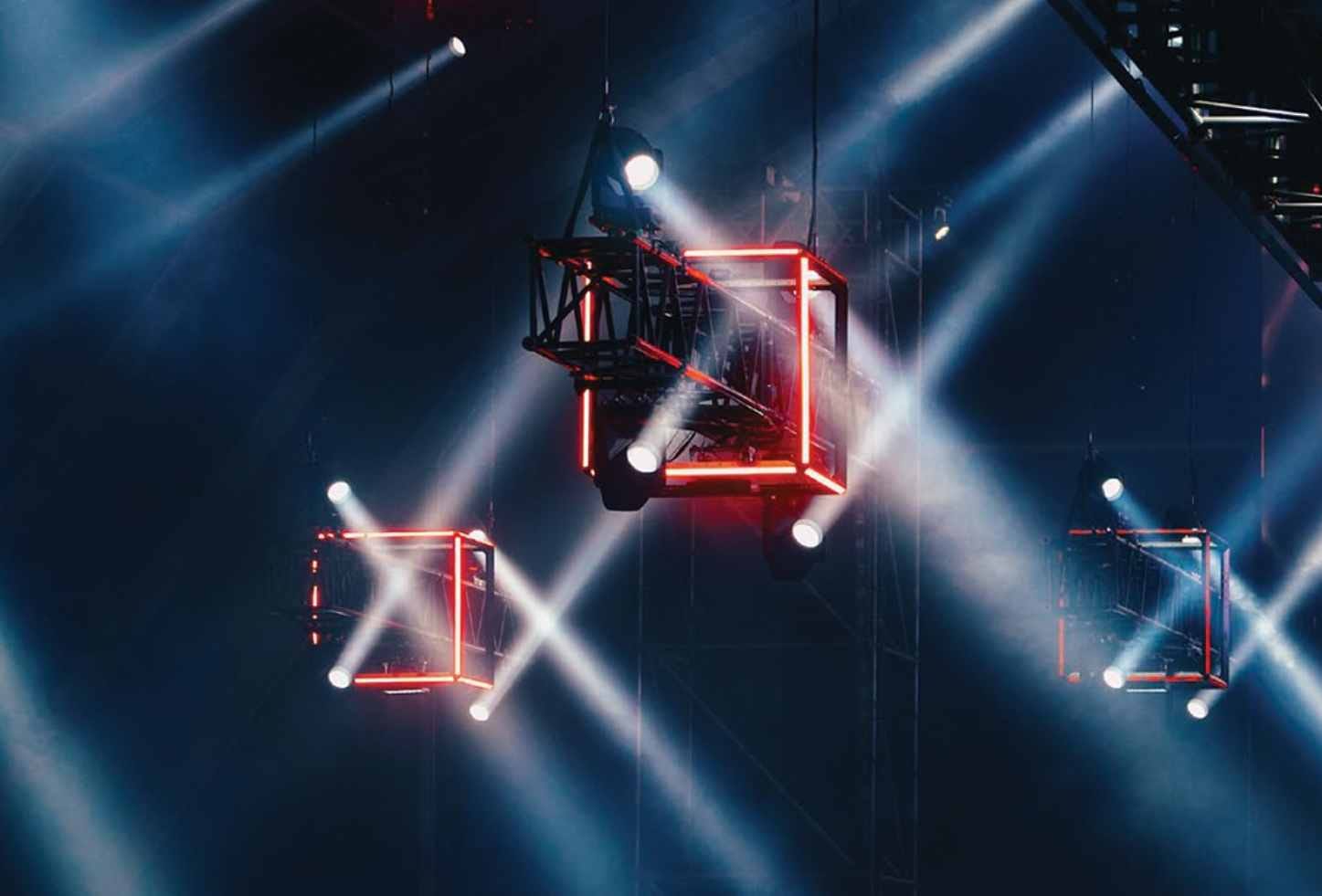
At first glance, Pulse looks familiar. It is a one-meter video strip designed to become part of a larger visual structure.
Look closer, however, and the philosophy behind the product feels very different.
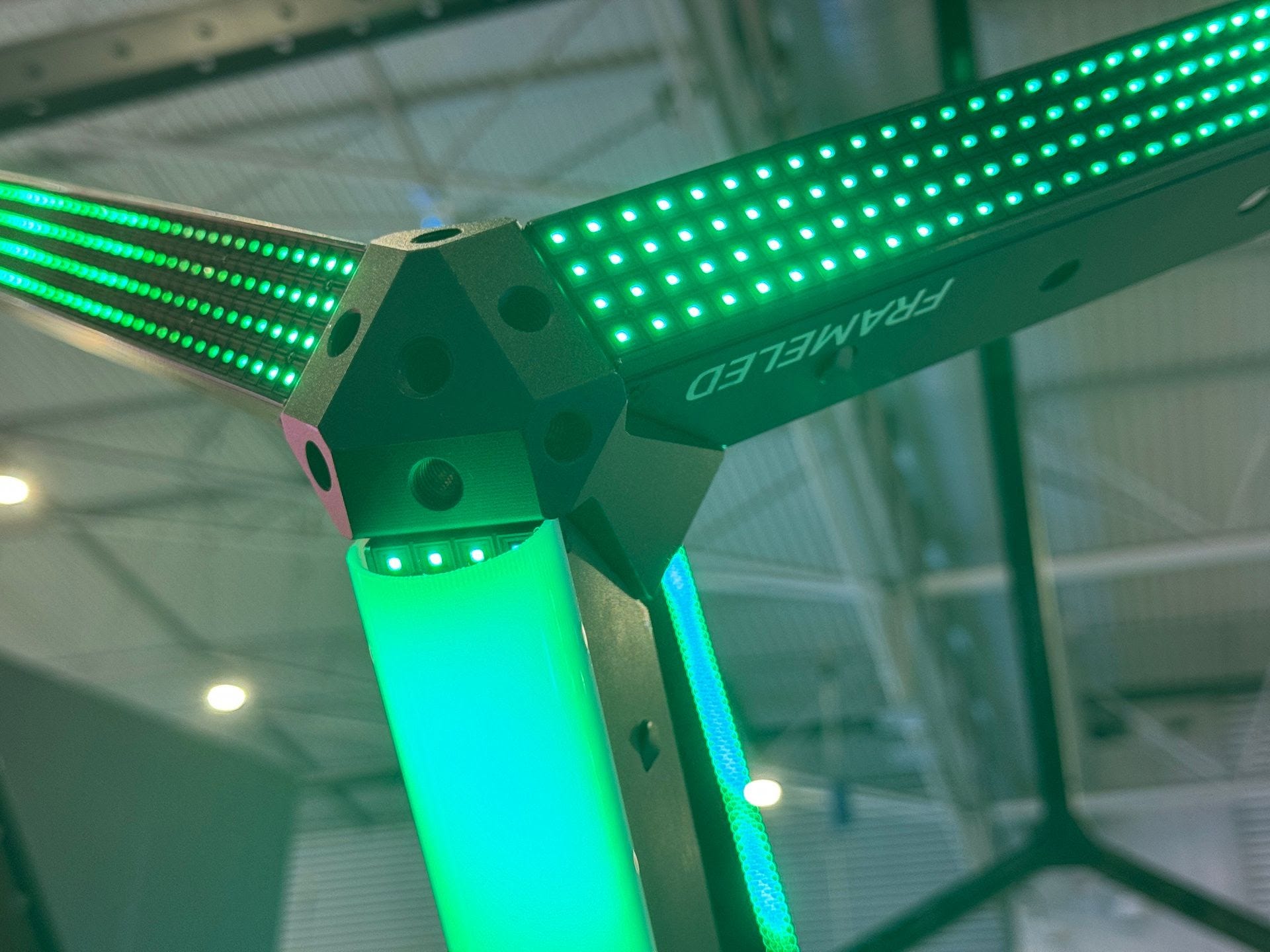
Rather than treating the strip as an accessory that requires layers of external hardware, FRAMELED approaches the problem more like a modern LED screen manufacturer would. Every module includes a built-in NovaStar receiving card, dramatically simplifying how systems are assembled and integrated.
For technicians, this means fewer components.
For designers, it means greater freedom.
For production companies, it means a cleaner workflow from warehouse to stage.
It is one of those improvements that sounds technical until you actually build a structure and realize how much time, space, and effort it saves.
When hardware becomes part of the creative process
What makes Pulse particularly interesting is that the product is not limited to the strip itself.
The system has clearly been developed around the idea that designers rarely want straight lines.
Stages rarely consist of straight lines.
Immersive environments rarely consist of straight lines.
Creative ideas almost never consist of straight lines.
FRAMELED therefore comes with an extensive ecosystem of connectors, mounting accessories, corner elements, safety components, and diffusers designed to encourage experimentation rather than restrict it.
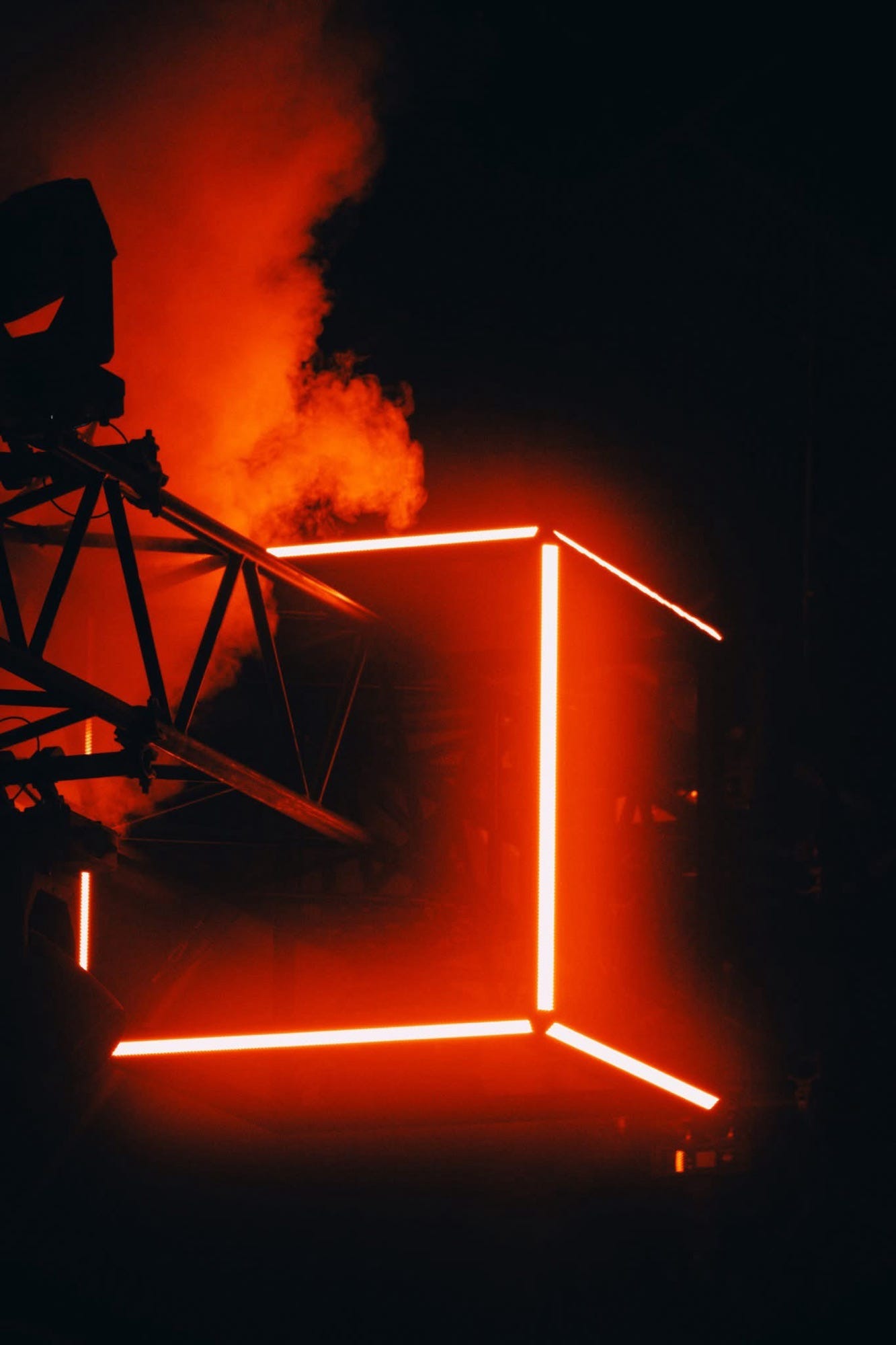
The result is a system capable of creating everything from subtle architectural outlines to suspended cubes, geometric sculptures, tunnels, scenic frames, and three-dimensional visual structures.
The hardware stops being merely a display device and starts becoming a construction tool.
That distinction matters.
Some technologies inspire creativity because of what they show.
Others inspire creativity because of what they allow you to build.
Pulse belongs firmly in the second category.
A product designed for the realities of modern production
The live events industry has changed significantly over the last decade.
Touring schedules are tighter.
Budgets are scrutinized more carefully.
Clients expect more content, more visuals, and more flexibility than ever before.
At the same time, outdoor events have become increasingly important, making weather resistance less of a luxury and more of a requirement.
FRAMELED Pulse feels very much like a product designed with these realities in mind.
Its IP65 rating allows it to move comfortably between indoor productions, outdoor festivals, television environments, and permanent installations. Its brightness makes it equally effective during daylight hours and after sunset.


This is an important point that is often overlooked.
Many visual elements truly come alive only when darkness arrives. Pulse remains visible throughout the day, allowing scenic elements to contribute to the visual identity of an event long before the first lighting cue is triggered.
For festivals, corporate events, and outdoor productions, that can make a significant difference.
More than a stage product
Perhaps the most interesting thing about creative LED technology is that it rarely stays within the boundaries of one industry.
The same products that appear on concert stages often find their way into exhibitions, museums, retail environments, themed attractions, esports venues, and immersive experiences.
Pulse seems particularly well positioned for this crossover.
Because it is not trying to replace traditional LED screens.
Instead, it complements them.
It adds dimension where screens add content.
It adds structure where screens add scale.
It adds visual language where screens add information.
In a world increasingly filled with giant displays, there is something refreshing about a technology that focuses on shape, space, and creativity rather than simply adding more pixels.
Already appearing on Polish productions
While FRAMELED Pulse is still a relatively new product internationally, it is already beginning to find its audience in Poland. Several production companies have added the system to their inventory, and the technology is also available through ARENTAL , giving designers and technical teams an opportunity to experience it in real-world applications.
That availability matters.
Creative technologies are difficult to judge from brochures or specification sheets alone. Their true value only becomes apparent when they are integrated into a stage design, an event concept, or an immersive environment.
And that is perhaps where Pulse has its greatest opportunity.
Not in replacing existing technologies.
But in giving designers one more creative layer to work with.
The next chapter of creative LED?
It would be easy to describe FRAMELED Pulse as simply another LED product.
But that would miss the point.
What makes it interesting is not the strip itself. It is the way it reflects where creative LED technology appears to be heading: away from rigid formats, away from technical complexity, and toward systems that encourage experimentation while simplifying execution.
Whether it ultimately becomes as influential as the products that inspired it remains to be seen.
What is already clear, however, is that creative video strips are evolving once again.
And this time, they may be easier to use, easier to integrate, and far more versatile than ever before.
AV LIGHT is the exclusive distributor of FRAMELED™ in Poland. The company provides product demonstrations, technical support, consulting, and access to the complete FRAMELED ecosystem, including accessories, power solutions, and creative mounting options. FRAMELED Pulse is also available through A-Rental, allowing production companies and designers to test the system in real projects before investing in their own inventory.
You may also want to read: